Boot Rant
Tech Stack
JavaScript
Node
PostgreSQL
REST API
GitHub
Express
The idea
A journal for boot-campers to encourage reflection on their challenges and successes
Discovery
For this project I lead the team through a user centered design proces. To allow us to rapidly, research, define a solution/mvp and deliver it within the week sprint
Getting started
To promote cohesion with the newly formed team we first created a team manifesto to align our ways of working.
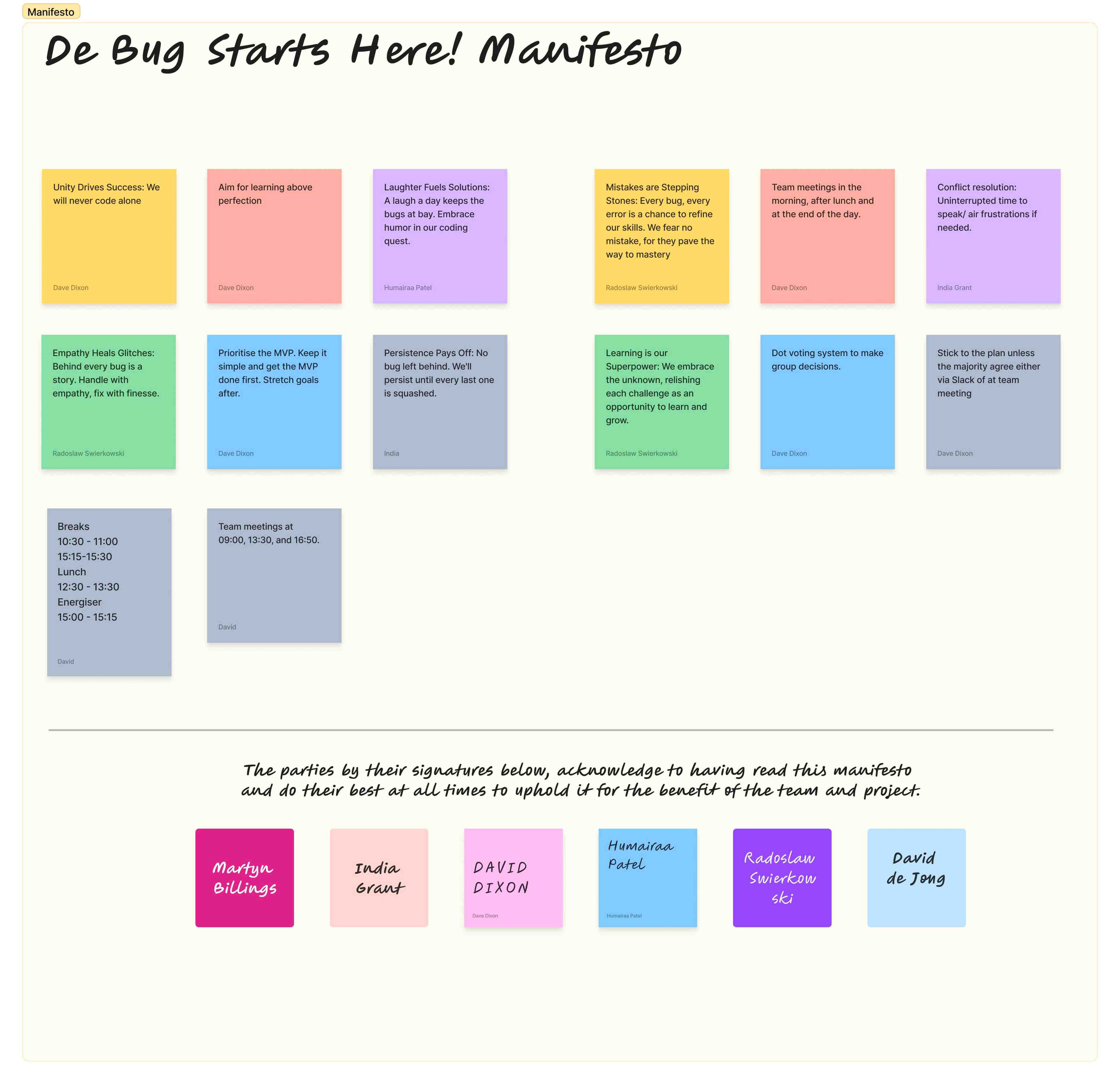
Now we could begin with defining the scope/problem space. Using this as a framework we undertook user and competitor research.
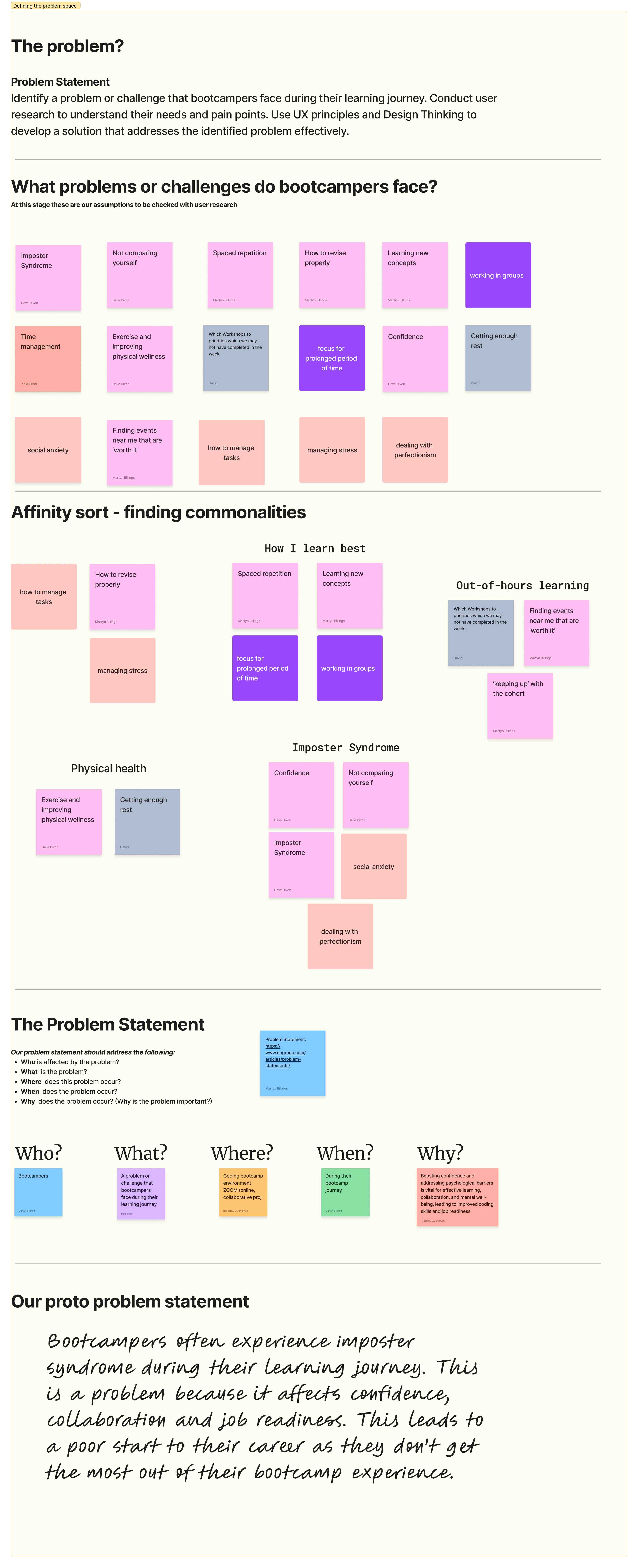
Using this as a framework informed user and competitor research.
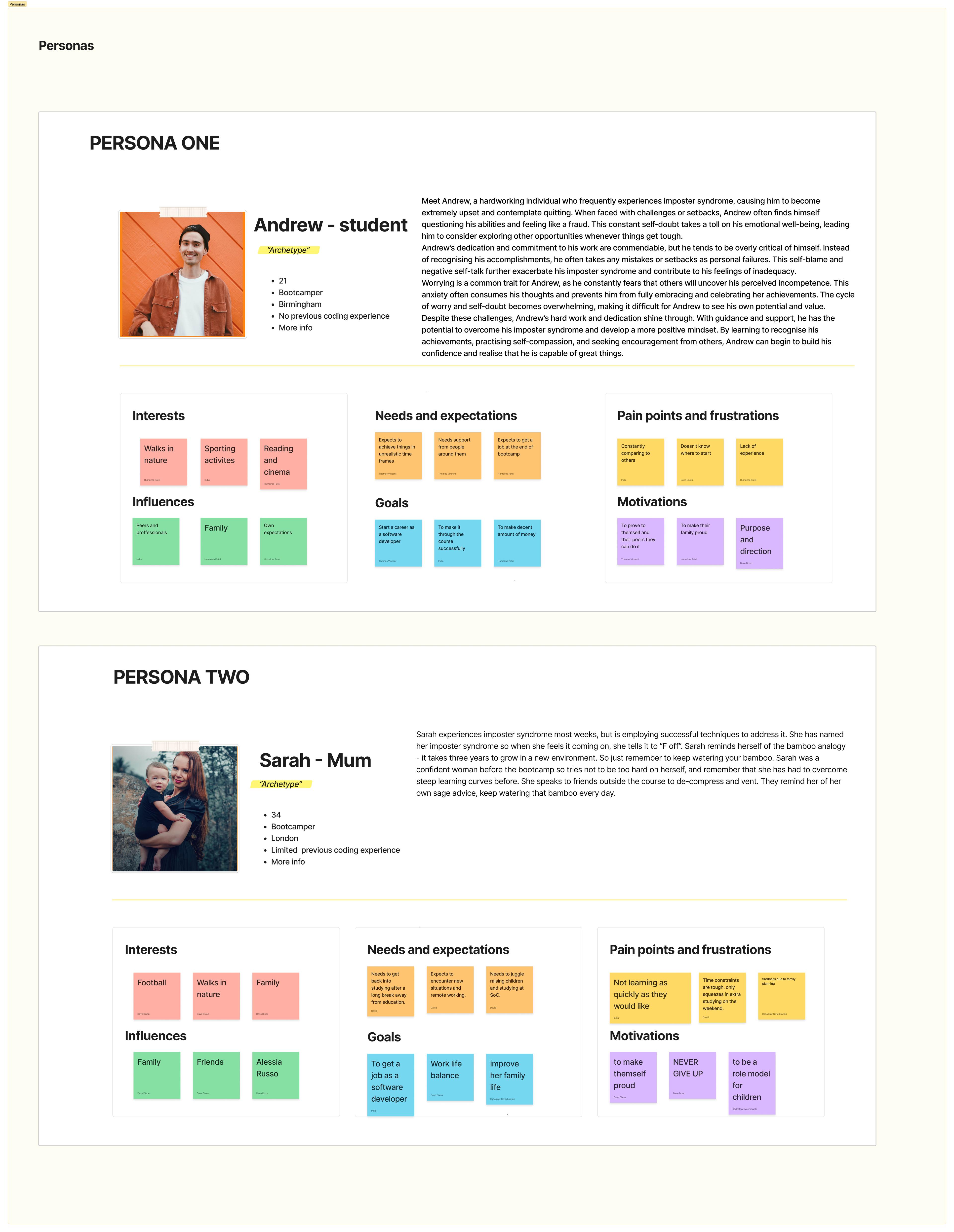
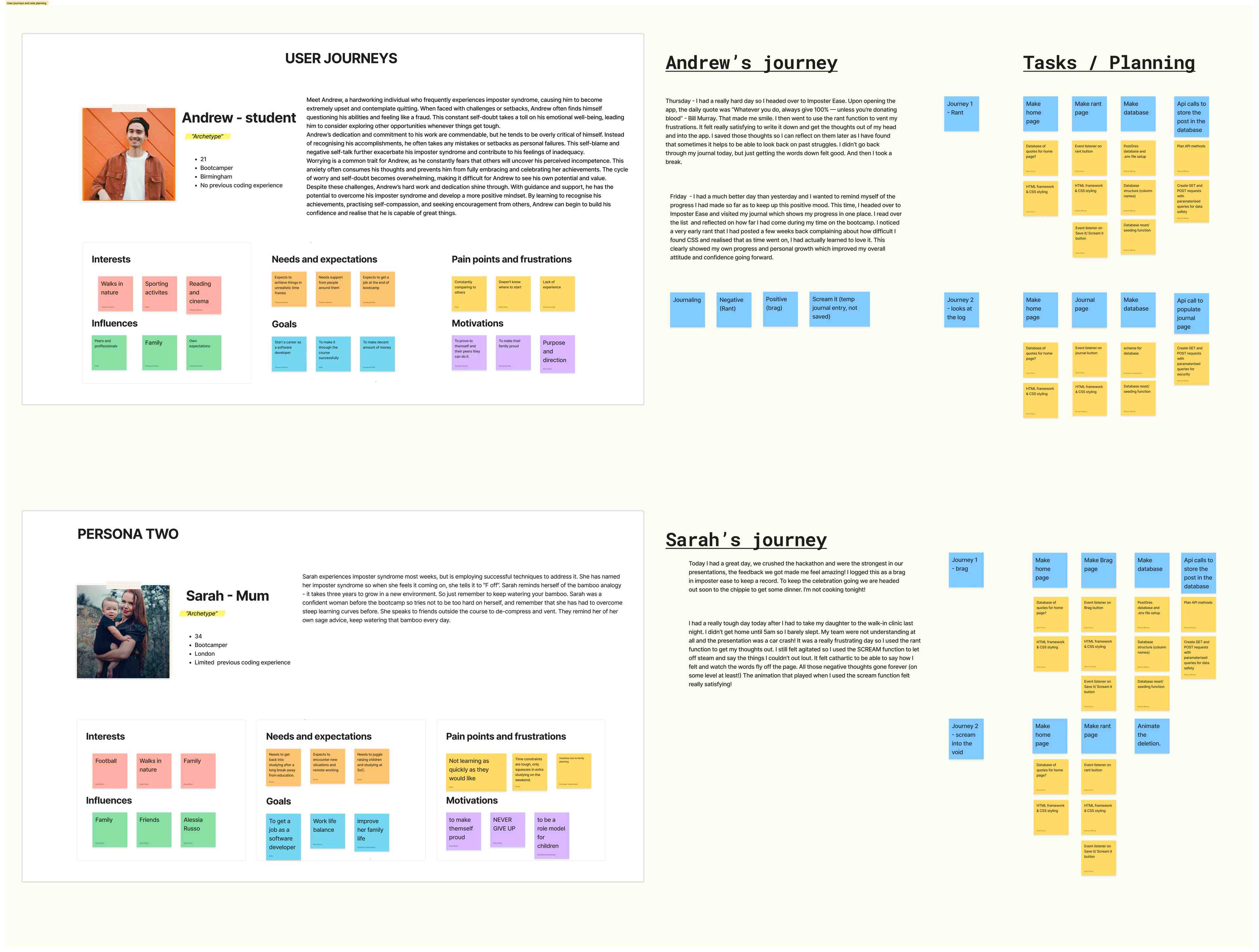
All of this culminated in a pair of user personas to represent our learnings. Andrew the recent graduate unsure of his place in the world. Sarah the mum to a young family, her years of experience in work causes her to feel a bit lost embarking on a complete career change with people relying on her.
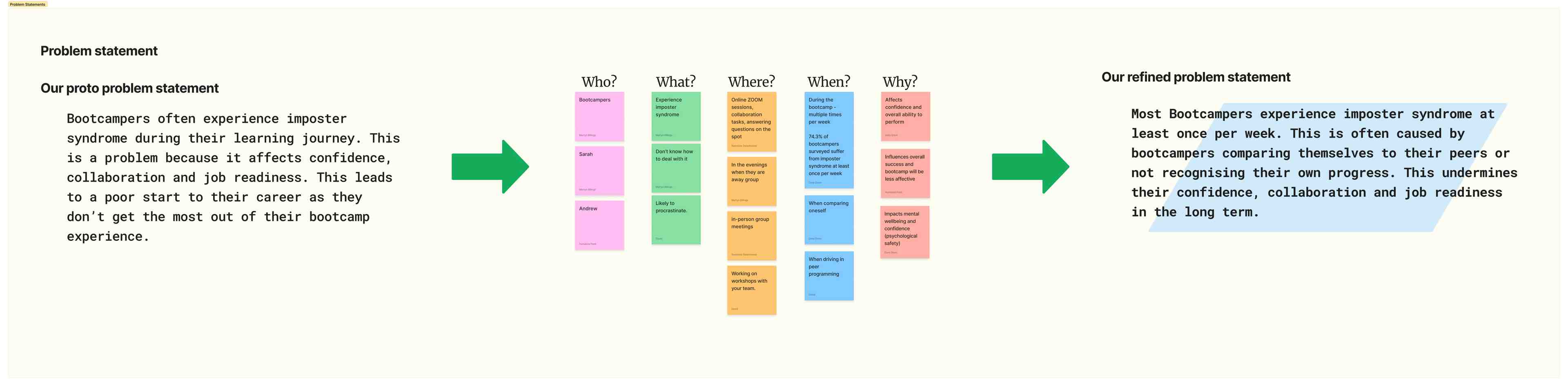
All of this allowed us to finally arrive at a refined problem statement. Thereby allowing us to progress to the next stage of the project, ideation.
Ideation
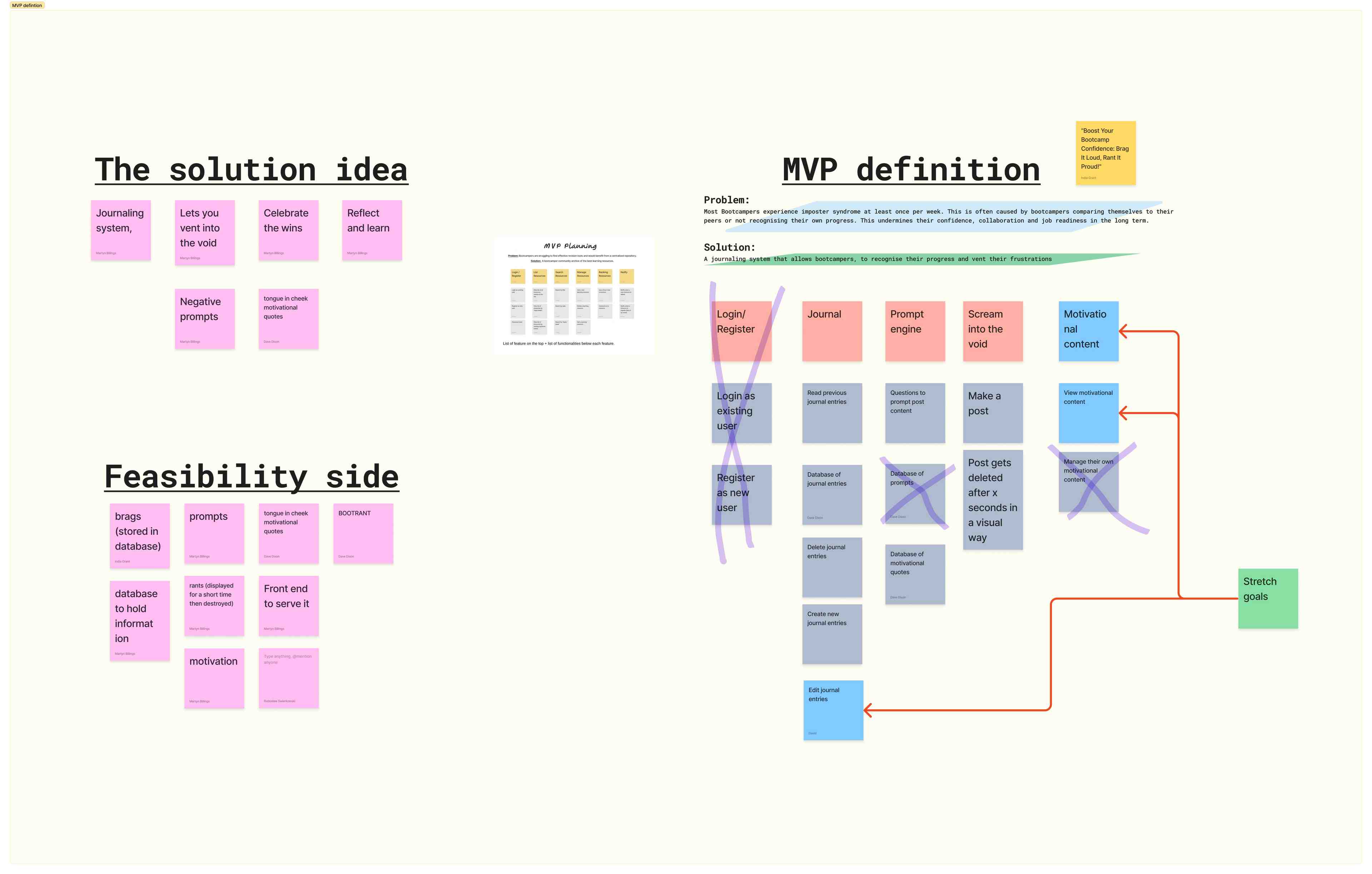
Ideation was facilitated using the disney ideation method, then the ideas were refined using our personas. Then checked against feasibility given the contstraints of the project. The time pressures meant many solutions had to be shelved and were marked out as grey sticky notes.

With the idea nailed down the ideal solution was mapped out then any extrenous features where marked in grey again. Leaving us with a streamlined and deliverable MVP.
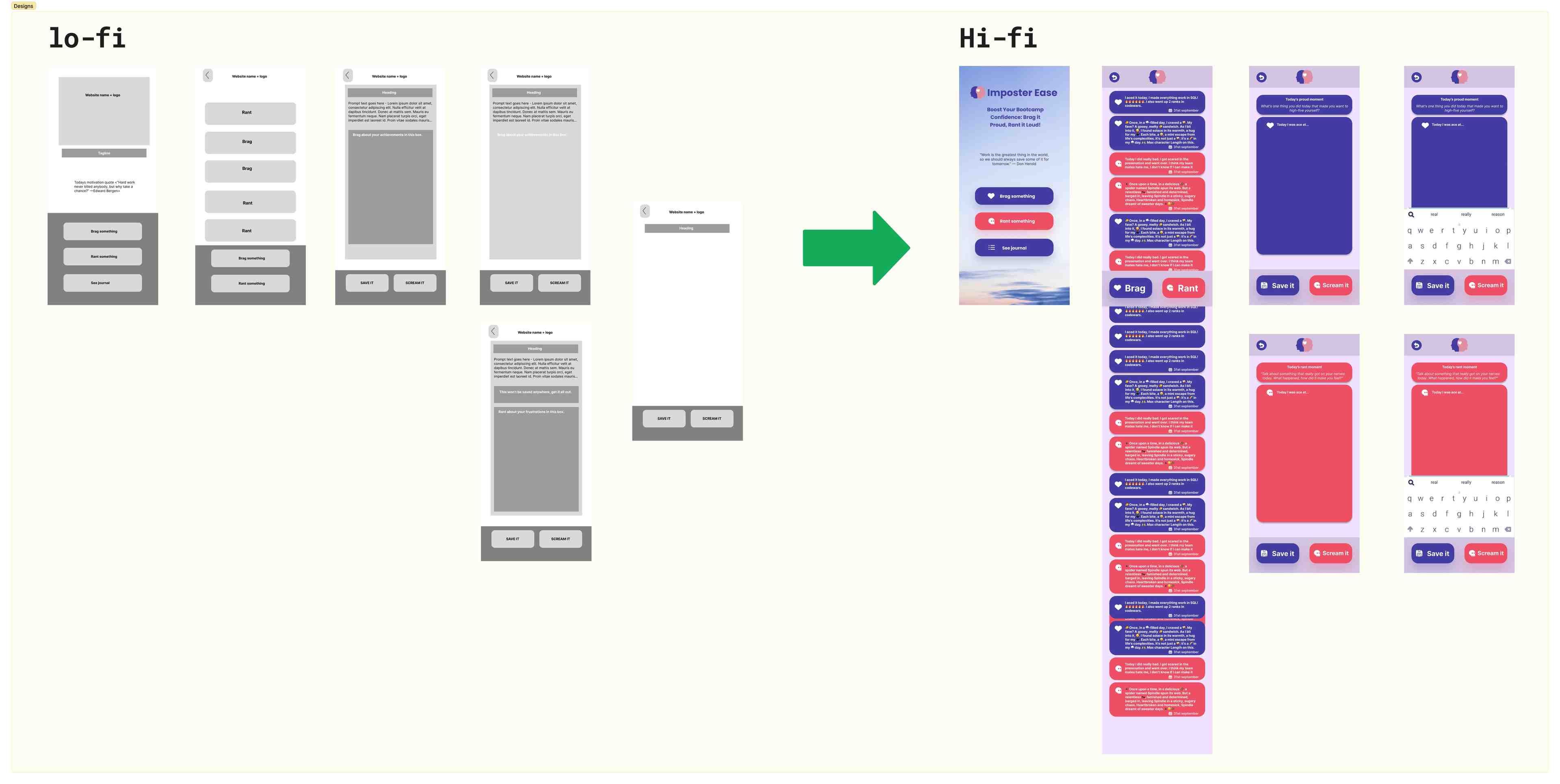
Designs were rapidly created in lo-fi grey before being refined into hi-fi designs to build. This was accomplished using Figma so we could get a feel for the sizes and flows by viewing them on our own phones.
The last step before coding was to finalise the user stories and subsquent tasks so the work could be completed efficiently.
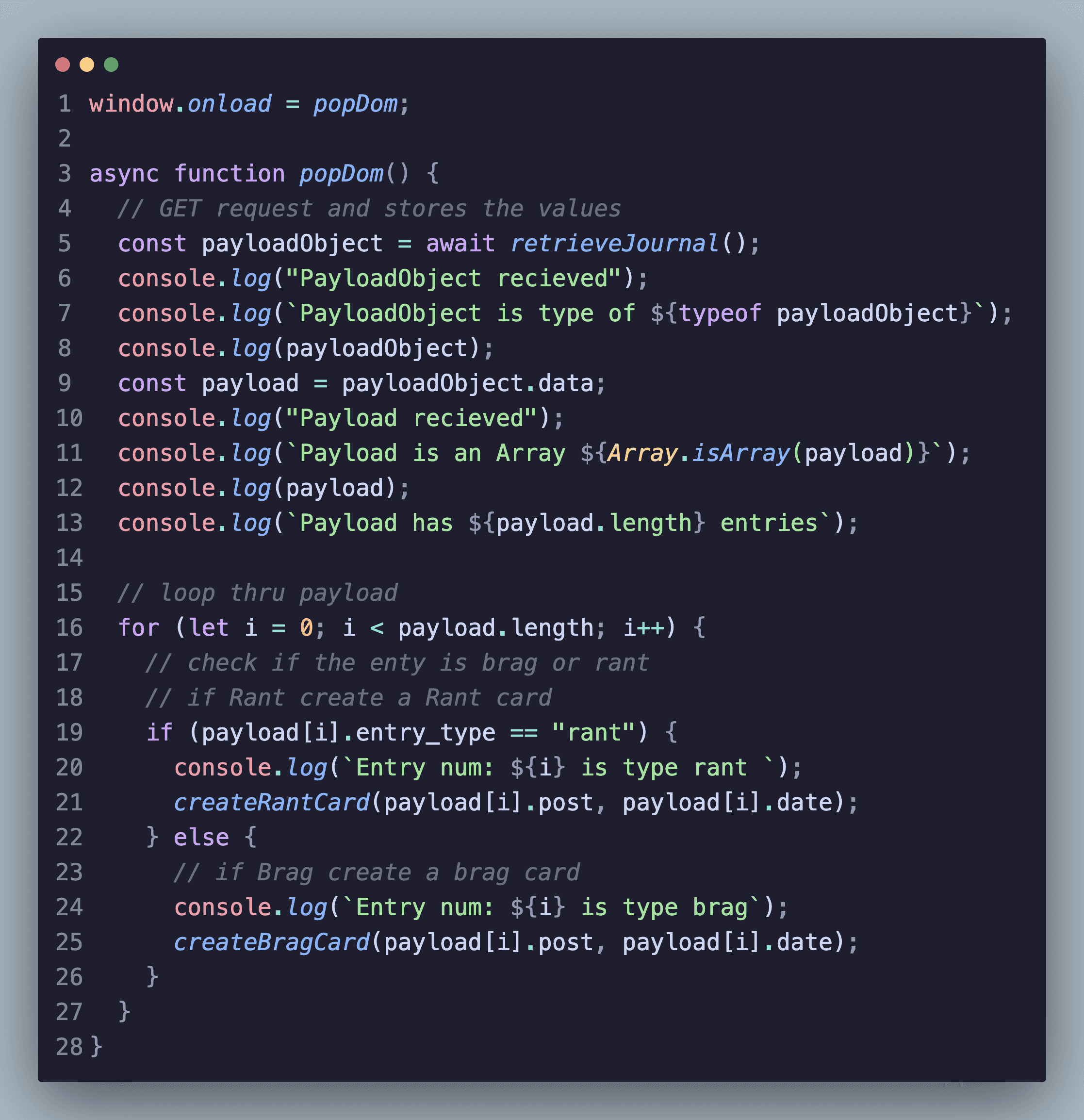
One of the functions I was responsible for was creating the cards on the journal page. The data for these was provided via a fetch request getting all the records from our postgreSQL database.
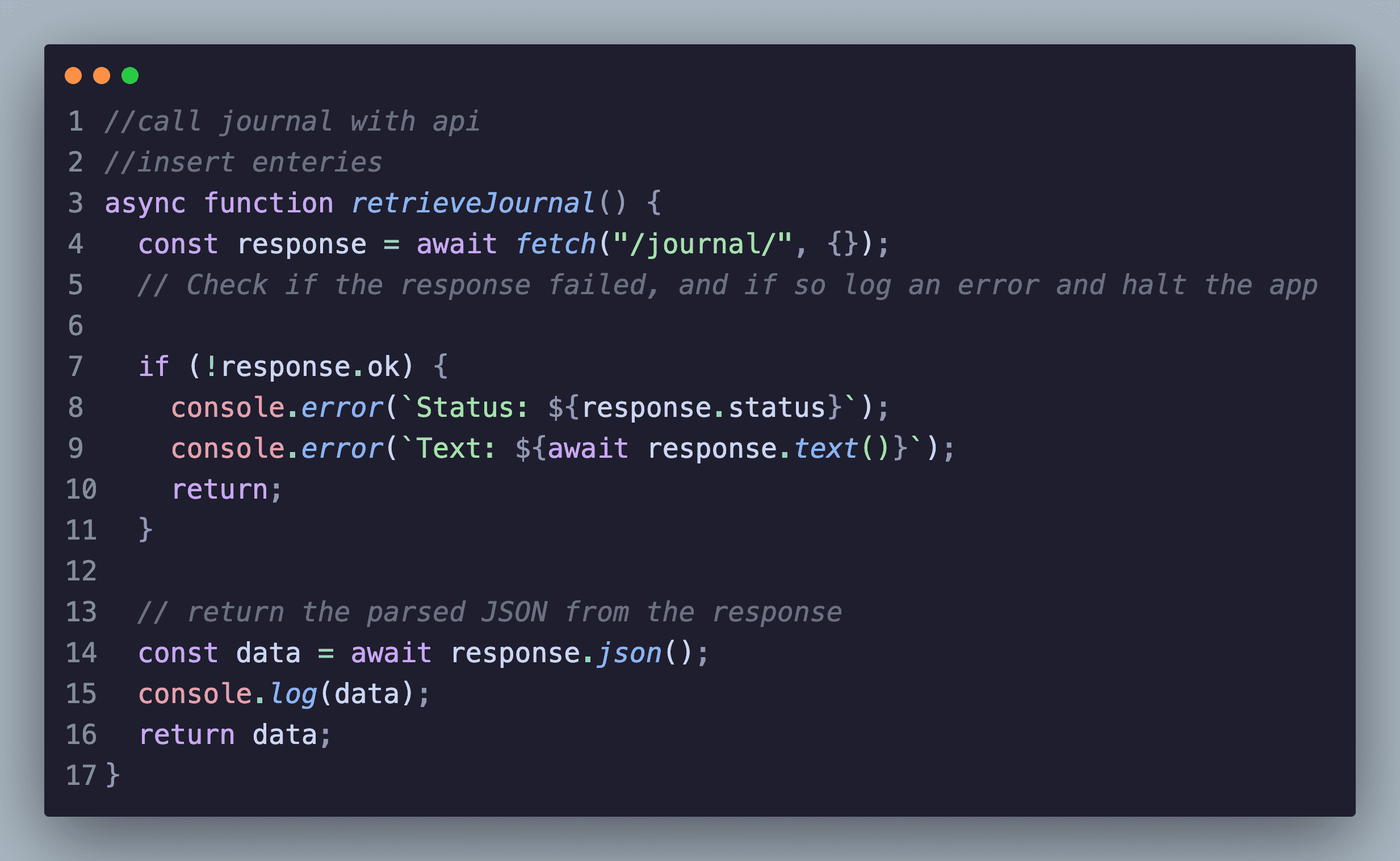
To the generate the cards I created a series of functions that were called on page load to iterate over the fetched data and manipulate the dom to create the elements in sequence.
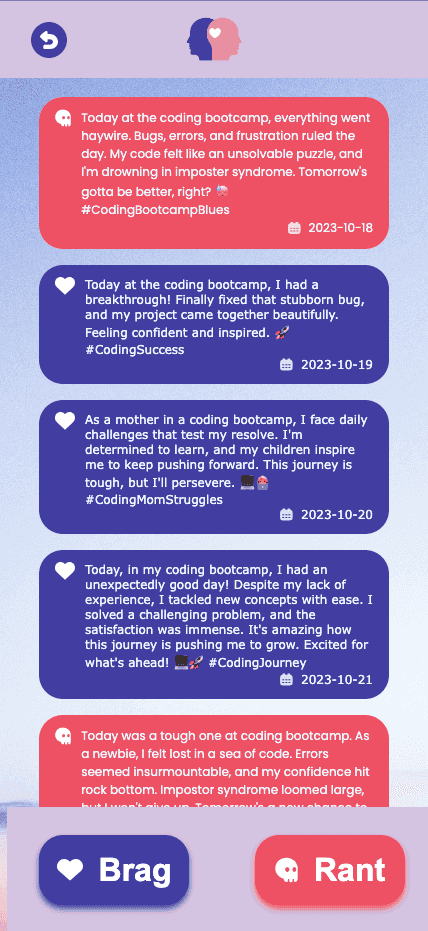
With these functions operating the working end result looks like this on a mobile device.
Project reflections
We achieved our goals for this project. Given more time I would have wanted to define the desktop interface and used media queries to make it happen. As it stands it only truly functions on mobile views. I learnt a lot about DOM manipulation and got to grips with fetch requests during this project. There was a lot of trial and error getting the CSS, JavaScript and HTML to come together to programmatically display content.